
How to Promote Your Small Business (Without Feeling Like a Used Car Salesperson)
Key Takeaways
The discomfort and cringe you feel when you talk about yourself is not a you problem, it's conditioning. (And it can be unlearned!)
Every time you stay quiet instead of confidently tell folks what you do, someone who needed your services walked away not knowing you exist.
Self-promotion is a skill, not a personality trait, and like any skill, it gets easier every time you use it. So practice!
Ok biz owner, you have a great business. You're good at what you do. But the moment someone at a networking event asks what you do, you suddenly can't form a sentence. Instead of being confident and clear, you spout out some rambling non-answer haiku, then panic-pivot with "What about you?" and spend the rest of the night talking about everyone else.
Sound familiar? Yeah. Us too.
At Big Bad, our mission is to empower entrepreneurs, so consider this your pep talk.
We're here to help you ditch the "don't take up space" conditioning, and reframe what self-promotion actually is. Plus, we give you 5 tactics to show up in every room like you belong there, so you can stop shrinking and your business can actually grow (yes, even if you’re marketing on a small business budget!)
Let's start by calling it like it is. 👉
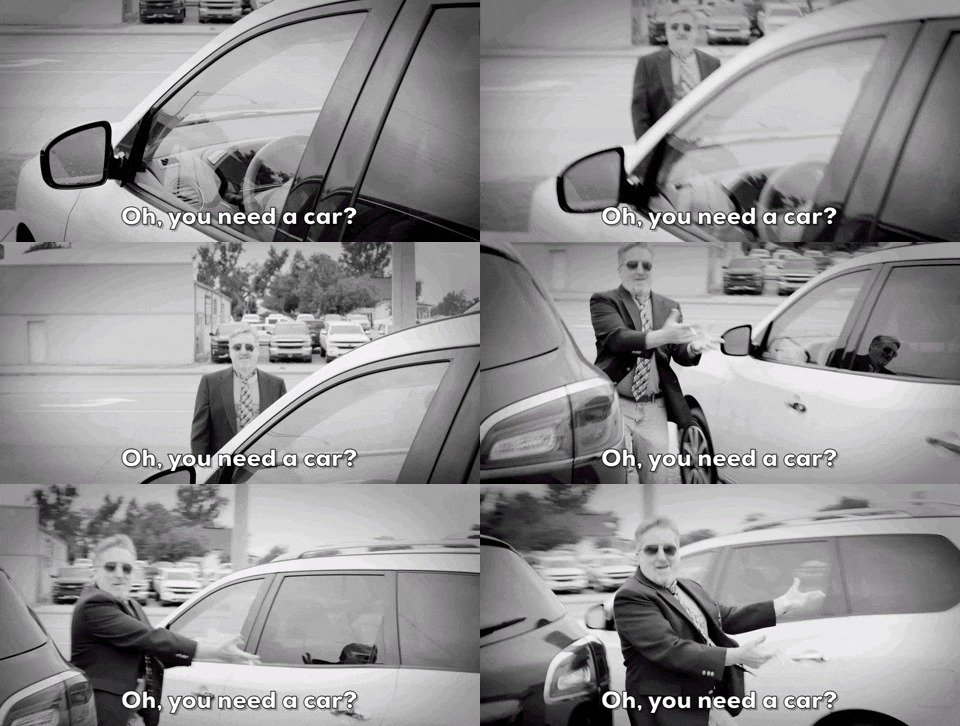
Why Self-Promotion Feels So Cringe
Self-promotion gives most people the ick.
It's like the shameless mall kiosk salesperson. You know, the one with the face cream samples who makes intense eye contact, lures you in with a compliment and a free sample, then holds you hostage for eight minutes talking about a cream made from sea slugs that will erase your fine lines. You can't leave until you buy it, partly because they've guilted you into it and partly because now you're kind of curious. (Def not because it’s an amazing, compelling offer, it’ just high-pressure!)
Nobody wants to be that person. But here's the thing: that ick feeling isn't really about self-promotion. It's about what we've been conditioned to believe about taking up space.
So many of us were conditioned early on to believe that taking up space is rude, that talking about yourself is bragging, that being seen is somehow negative attention seeking. We fear that people will judge us or reject us. They’ll think: What if they think this is silly? What if they think we're not ready? What if they ask something we can't answer?
Layer some imposter syndrome on top of that, like What if they think we don't even know what we're talking about? They’ll reveal us as frauds! and it's no wonder we silence ourselves into playing small.
And all along we called it being humble. We called it not wanting to brag. We called it a lot of things before we realized what it actually was.
It's not a confidence problem. It's a conditioning problem. And if it’s conditioning, that means it can be unlearned.
The Real Price of Not Promoting Yourself
If you've been treating self-promotion like something that makes people uncomfortable, or makes you look bad, here's what's actually happening: you're invisible. And invisibility has a price tag.
Consider the opportunity cost: every time you shrink, deflect, or let the moment pass, you’re giving up a chance to grow your business. Someone in that room needed exactly what you offer. They just never found out because you didn't speak up.
Every time you don't tell someone what you do, you're making the decision for them that they don't need you. That's not your call to make.
The right people deserve to find you. And the only way that happens is if you show up. Big and bad.
If this is giving you the permission slip you didn’t know you needed to run your business with confidence…
You'll love the Big Bad Marketing newsletter. Every month we send tactical marketing support straight to your inbox.
Plus a few sweet extras just for joining.
What Self-Promotion Actually Means, What It Doesn't (And How To Do It Like A Pro)
Spoiler alert: self-promotion has nothing to do with selling.
Self-promotion is NOT:
Bragging
Being pushy
Making it all about you
Faking confidence you don't actually feel
Pressuring people into buying something they don't need
Self-promotion IS:
Letting people know you can help them (in a service oriented way)
Solving a problem they're already walking around with (or helping them see the problem they have that they didn't realize before)
Showing up so the right people can find you
When you come from a genuine place of service, because you truly believe in what you do, that energy is magnetic. People feel the difference between someone who wants to help and someone who just wants to sell at them.
Self-promotion only feels salesy and cringe when it's not authentic. If you believe in what you do, staying quiet isn't humility. It's doing a disservice to the people who need you.
5 Ways to Promote Yourself Without Feeling Like a Used Car Salesperson
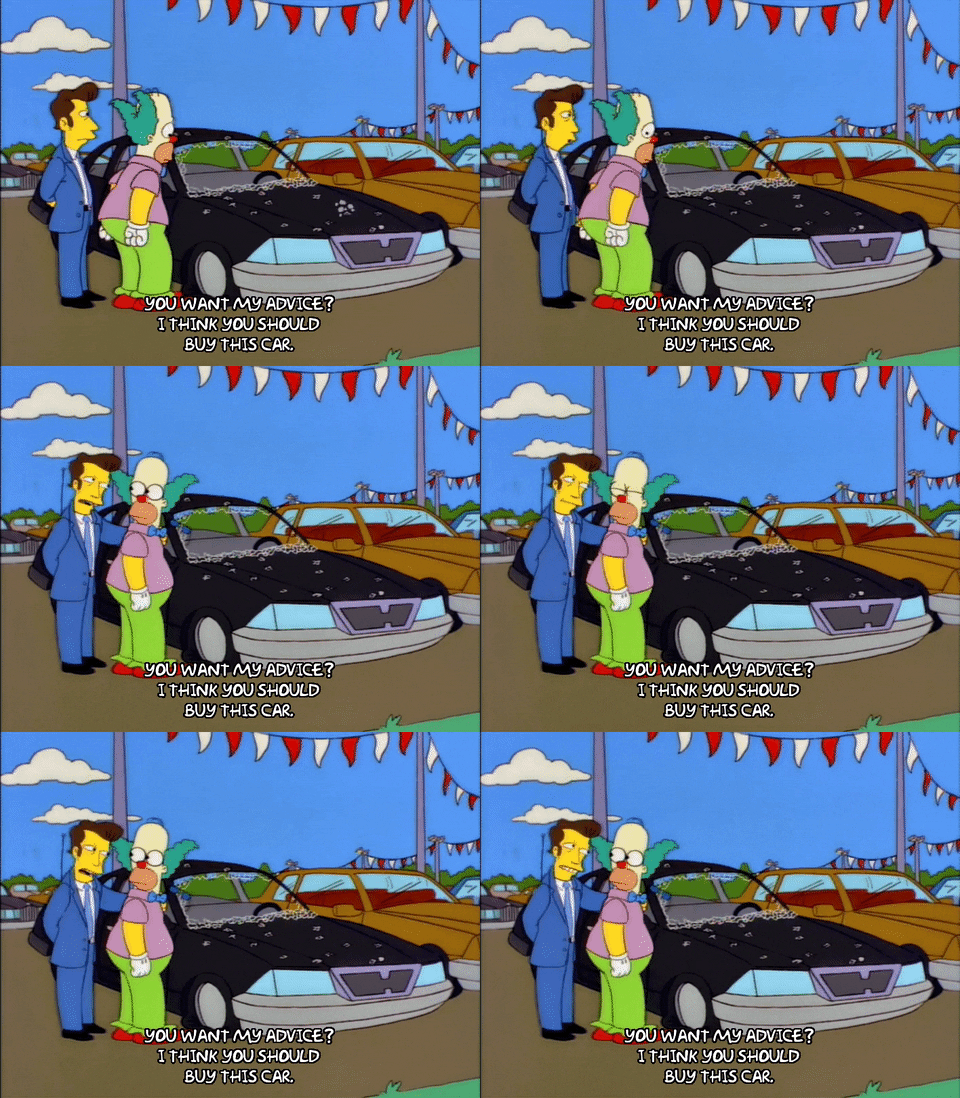
Like any skill, promoting your business gets easier with practice. Yes, the first few conversations will feel awkward…that's normal. But after session one, two, ten, and somewhere along the way it just starts to feel like a thing you do.
Here are 5 ways to make promoting your business (and yourself) less cringe:
Lead with the problem you solve, not your title
"I help small business owners get more clients without paid ads" hits differently than "I'm a marketing consultant." One makes someone lean in. The other gets a polite nod and a slow drift toward the cheese table. Nail that, and the rest of the conversation takes care of itself.
2. Talk about outcomes, not features
Nobody cares that you use “innovative techniques” in your massage practice. They care about “ not being stressed tf out,” and tension melting away. Paint the picture of where they could be. Bonus points for using the words your clients would actually use so it stops feeling like a sales pitch and starts feeling like a solution to their problem. For example, we help you make marketing less overwhelming so you can reach revenue goals and make more money!!!$$$
3. Share stories instead of credentials
"I helped a client double their revenue" is forgettable. The story of what they were struggling with, what shifted, and what their life looks like now, that's something people relate to, remember and repeat.
4. Read the room
In person, body language is everything. If a certain word makes someone's eyes light up, lean into it. If they start glancing toward the door, pivot. Being attuned to the other person is itself a form of service.
5. Use humor and common ground to break the ice first
Before the conversation gets to business, be a real person. A genuine compliment, a shared observation, a little humor, anything that drops the wall. Once it's down, talking about what you do feels a lot less like a performance.
Pro Tip: Nobody is thinking about you as much as you think they are. That moment you're replaying at 11pm instead of sleeping…they forgot about it before they got to their car.
You don't have to nail all five at once. Just pick one and find one conversation this week to try it. The grocery store, the library, a networking event, it doesn't matter. By the end of that interaction, one person should know what you do and how they could work with you. Then do it again next week. That's how the muscle gets built.
Building the Confidence to Promote Yourself
Tactics only get you so far. A lot of the resistance to self-promotion isn't really about strategy, it's about worthiness. That quiet voice that says: who am I to say I'm good at this?
So, in case nobody told you today:
You are worthy.
You are capable and competent.
What you're bringing to the world matters.
The people who need you deserve to find you.
Confidence isn't a destination. Some days it's easy. Some days you're right back at that networking event, deflecting before anyone can ask a follow-up. That's okay. Notice it, name it, and try again.
Believe in yourself. Believe in your business. When those two things are aligned, showing up stops feeling like a performance and starts feeling like exactly what it is.
Here's What to Do Next
Self-promotion isn't a personality trait you either have or you don't. It's a skill, and like any skill, it can be learned, and gets easier every time you use it. So practice. A lot.
Your goal isn't to become a different person, it’s to step outside of your comfort zone and show up confident. Because once you do, your small business can actually grow.
And if it's not growing the way you know it should, something else might be getting in the way.
Not sure what that is? Take our free growth bottleneck quiz and find out in 5 minutes…we'll help you figure out exactly where to focus.
Or skip the quiz and book a free 15-minute call with your marketing besties to talk it out. We got you.
